In a marketing world dominated by screens, print remains one of the most effective tools a small business can use to build real, lasting connections with customers. While digital ads flicker and disappear, a well-designed brochure, business card, or banner stays in someone’s hand, and often on their desk long after the interaction ends. For owners looking to stand out, understanding commercial printing services for small businesses and how to use them strategically can make a measurable difference in brand recognition, customer trust, and even sales.
It’s easy to assume that print has been replaced by digital marketing, but the numbers tell a different story. Physical print materials can boost message recall by as much as 70% compared to digital-only campaigns, and businesses that incorporate print into their marketing mix often see a 20–30% lift in response rates. The reason is simple: print is tangible. A folder left on a desk, a postcard stuck to a fridge, or a foil-stamped business card tucked into a wallet creates a physical reminder of a brand in a way that an email or social post cannot.
Communication generally serves several purposes (informing, persuading, clarifying, entertaining, inspiring, and identifying a brand), but print does one thing better than almost any other medium: it builds relationships. That’s precisely why many brands continue to invest in professional printing for everything from everyday stationery to large-scale trade show displays.
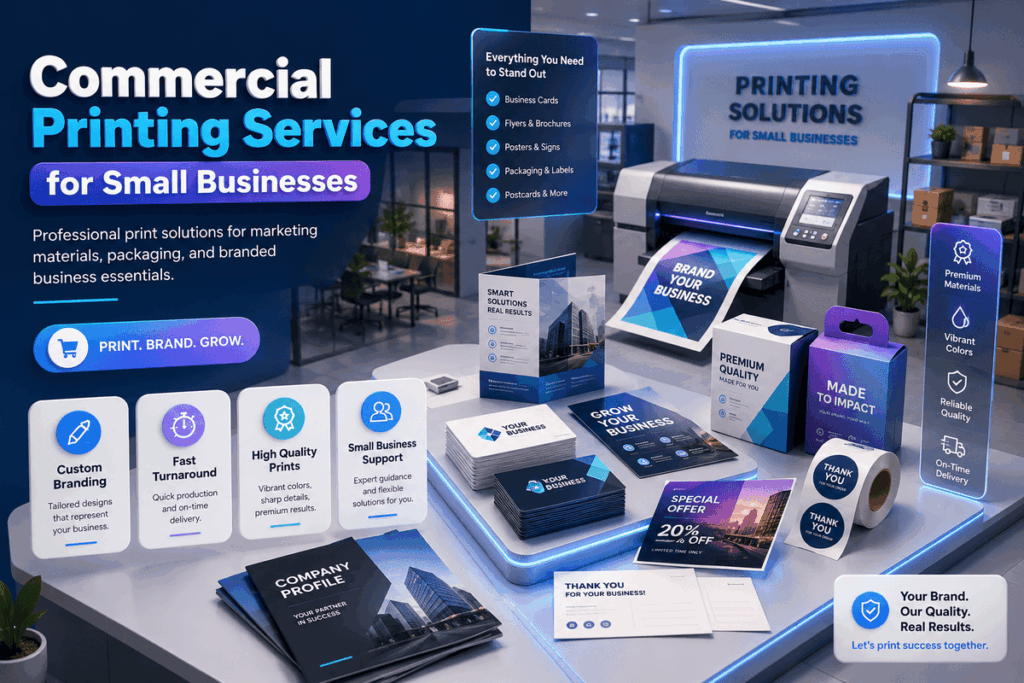
Commercial printing covers a wide range of products. When looking for the right commercial printing services for small businesses, companies typically rely on a mix of the following depending on their industry and goals:
Because small businesses often need only occasional runs of these materials, rather than the constant, high-volume orders that justify an in-house press, many owners find that working with a print broker rather than a single in-house printer gives them more flexibility and better results.
One of the biggest challenges small businesses face with commercial printing is that most individual print shops are limited by the equipment they own. A shop set up for high-volume offset printing may not be the right fit for a short run of foil-stamped cards, and a shop specializing in signage may not handle delicate packaging well. This mismatch often results in small businesses either overpaying for a job that doesn’t fit the shop’s strengths, or receiving a finished product that falls short of expectations.
A print broker solves this problem by starting with the project’s goals rather than a fixed set of equipment. Instead of forcing a job to fit what one shop can produce, a broker matches the specific job, whether it’s a foil business card, a custom pocket folder, or a large-format banner, with the production partner best suited to execute it. This is particularly valuable for small businesses that don’t print often enough to have built relationships with multiple specialized shops on their own.
Contrary to what many assume, using a broker doesn’t necessarily add cost. In fact, it can often reduce it. Print shops frequently offer brokers preferred pricing because brokers bring them a steady stream of business from multiple clients. And placing a job with the right shop from the start avoids the inefficiencies and added costs of a shop struggling to produce something outside its usual capabilities.
There’s also a significant time-saving element. Sourcing quotes from several printers, comparing capabilities, and managing quality control across vendors takes time that many small business owners simply don’t have. A broker who already has established relationships with a network of production partners, and already knows which shop excels at which type of job, removes that research burden entirely.
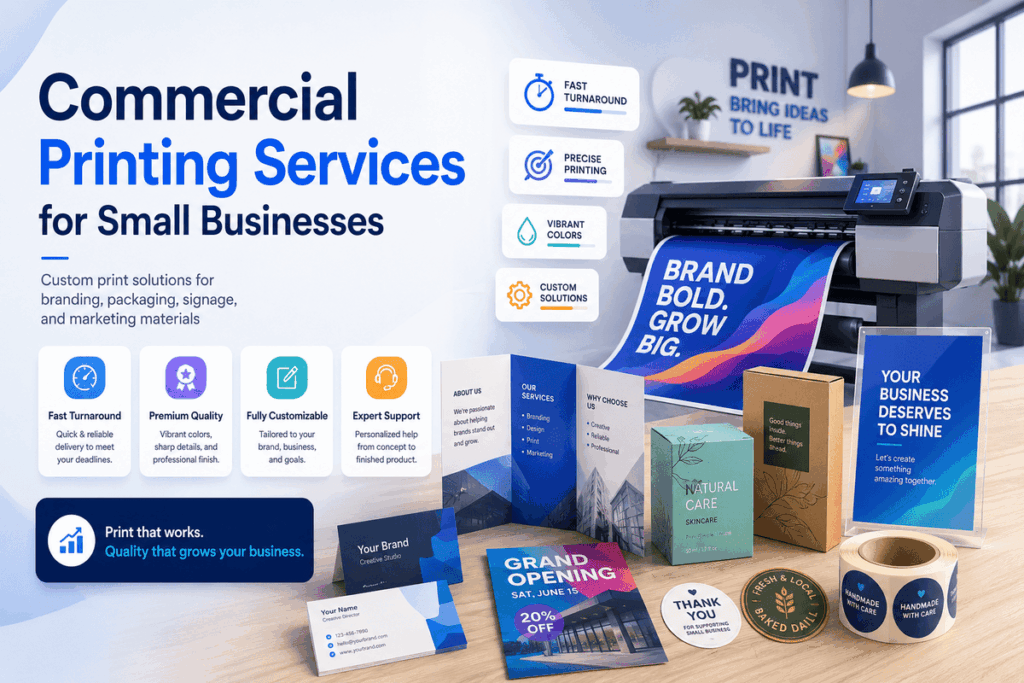
For small businesses new to working with commercial print services or brokers, the process is usually straightforward:
This kind of end-to-end management is especially helpful for small business owners who may only need a particular print job once or twice a year and don’t want to invest time building printer relationships from scratch.
When evaluating a commercial printing service, small businesses should consider more than just price. Key factors include:
Small businesses don’t need to abandon a printer they already trust. If an existing relationship already covers a business’s printing needs well, there’s no reason to change. The value of exploring broker or specialty services tends to show up specifically when a project falls outside what a regular printer can comfortably handle, such as unusual finishes, tight turnarounds, or niche packaging needs.
For small businesses, commercial printing isn’t just about producing paper goods; it’s about creating tangible touchpoints that build trust and memorability in ways digital marketing alone can’t replicate. Whether it’s a foil-stamped business card, a branded folder for a sales meeting, or a large banner for a local event, the right print materials, produced by the right partner, can meaningfully strengthen a small business’s presence and credibility.
Businesses evaluating their options, especially those with irregular or specialized needs, may find that utilizing comprehensive commercial printing services for small businesses through a broker-style platform like business-printing.com offers more flexibility, better pricing, and less hassle in the long run.